


Signals and System (CUTM4341)
Teacher
Dr. Ribhu Abhusan Panda

Category

Course Attendees
Still no participant
Course Reviews
Still no reviews
| Introduction: The Signals and Systems course is a foundational subject in electrical, electronics, and communication engineering. It introduces students to the fundamental concepts of analyzing and understanding signals, systems, and their interaction in both continuous and discrete time domains. This course equips students with essential tools and techniques, such as Fourier transforms, Laplace transforms, Z-transforms, and MATLAB simulations, to study and design systems used in signal processing, communication, control, and other engineering applications. | ||||||||||||
| Course Objective: · Introduce the student to the idea of signals, system analysis and its characterization. · Provide a foundation to numerous other courses that deal with signal and system concepts directly or indirectly: viz: communication, control, instrumentation etc. · To provide hand on experience of signal & and system techniques using MATLAB | ||||||||||||
Course Outcomes:
|
| PSO1 | Graduates will apply their learning outcome of the program creatively and productively in the fields of Embedded Systems, VLSI, and Communication Systems |
| PSO2 | Solving real-life problems, design and develop novel products that are technically sound, economically feasible, and socially acceptable |
| PSO3 | Add value to interdisciplinary areas in providing solutions in agriculture, manufacturing, and security services |
| CO, PO Mapping Matrix | |||||||||||||||
| CO/PO | PO1 | PO2 | PO3 | PO4 | PO5 | PO6 | PO7 | PO8 | PO9 | PO10 | PO11 | PO12 | PSO1 | PSO2 | PSO3 |
| CO1 | 3 | 2 | 2 | 2 | |||||||||||
| CO2 | 3 | 3 | 2 | 2 | |||||||||||
| CO3 | 2 | 2 | 3 | 2 | 2 | ||||||||||
| CO4 | 3 | 2 | 2 | 2 | |||||||||||
| CO5 | 3 | 3 | 2 | 2 | |||||||||||
Syllabus
MODULE – I (6 Hours+4 Hours) Continuous-Time Signals and Systems: Continuous and discrete time signals: Some Elementary Continuous-time and Discrete-Time signals. Classification of Signals – Periodic and a periodic even – odd – energy and power signals – Deterministic and random signals – Causal and non causal signals and anti causal signals -- complex exponential and sinusoidal signals ---Simple Manipulations of Continuous and discrete time signals Practice:- Generate and plot elementary continuous-time and discrete-time signals (sinusoidal, exponential, step, impulse, and ramp) using MATLAB.
- Perform basic signal manipulations: time scaling, time shifting, and amplitude scaling
- Classify given signals as periodic/aperiodic, even/odd, energy/power signals, and deterministic/random using MATLAB
- Convolution of Continuous-Time Signals Using MATLAB
- Analyse discrete-time Linear Time-Invariant (LTI) systems by studying their input-output behavior, block diagram representation, and properties like causality and stability using MATLAB
- Simulate the response of LTI discrete-time systems to various inputs (impulse, step, sinusoidal) and plot the results
- Compute and visualize the Fourier series coefficients of a periodic continuous-time signal.
- Compute and plot the Fourier transform of a given aperiodic signal. Analyse the amplitude and phase spectra
- Compute the DTFT of a given discrete-time signal and study its properties (time and frequency domain characteristics).
- Simulate and analyze the Laplace transform of continuous-time signals. Perform inverse Laplace transformations using MATLAB
- Evaluation of Z-transform of discrete-time signals.
- Analyze the properties of Z-transform and solve difference equations using MATLAB.
- Signals and Systems--- Alan V. Oppenheim and Alan S. Willsky, PHI
- Signals and Systems – A Nagoor Kani, TMH
- Digital Signal Processing – Principles, Algorithms and Applications by J. G. Proakis and D. G. Manolakis, 4th Edition, Pearson.
- Fundamentals of Signals and Systems - M. J. Roberts, TMH
Session Plan
Session 1
Continuous-Time and Discrete-Time Signals https://www.youtube.com/watch?v=H4hk6N5vC1Q&pp=ygUpQ29udGludW91cy1UaW1lIGFuZCBEaXNjcmV0ZS1UaW1lIFNpZ25hbHM%3DSession 2
Classification of Signals: Periodic, Aperiodic, Even, Odd https://www.youtube.com/watch?v=Gj9pDC_OBQU&pp=ygU5Q2xhc3NpZmljYXRpb24gb2YgU2lnbmFsczogUGVyaW9kaWMsIEFwZXJpb2RpYywgRXZlbiwgT2RkSession 3
Energy, Power, Deterministic, and Random Signals https://www.youtube.com/watch?v=zaY7C1clVec&pp=ygUwRW5lcmd5LCBQb3dlciwgRGV0ZXJtaW5pc3RpYywgYW5kIFJhbmRvbSBTaWduYWxzSession 4
Causal, Non-Causal, and Complex Signals https://www.youtube.com/watch?v=mqwUtn5cip8&pp=ygUnQ2F1c2FsLCBOb24tQ2F1c2FsLCBhbmQgQ29tcGxleCBTaWduYWxzSession 5:
Causal, Non-Causal, and Complex Signals YouTube Link: https://www.youtube.com/watch?v=example5Session 6:
Manipulation of Continuous-Time Signals YouTube Link: https://www.youtube.com/watch?v=example6Session 7:
Manipulation of Discrete-Time Signals YouTube Link: https://www.youtube.com/watch?v=example7Session 8:
Basic Signal Manipulations (Time Scaling, Shifting, Amplitude Scaling) YouTube Link: https://www.youtube.com/watch?v=example8Session 9:
Mathematical Model of LTI Continuous-Time Systems YouTube Link: https://www.youtube.com/watch?v=example9Session 10:
Block Diagram and Signal Flow Representation YouTube Link: https://www.youtube.com/watch?v=example10Session 11:
Time-Domain Response of LTI Continuous-Time Systems YouTube Link: https://www.youtube.com/watch?v=example11Session 12:
Classification of Signals using MATLAB YouTube Link: https://www.youtube.com/watch?v=example12Session 13:
Convolution of Continuous-Time Signals YouTube Link: https://www.youtube.com/watch?v=example13Session 14:
Convolution of Continuous-Time Signals (Contd.) YouTube Link: https://www.youtube.com/watch?v=example14Session 15:
Classification of Continuous-Time Systems YouTube Link: https://www.youtube.com/watch?v=example15Session 16:
Convolution of CT Signals using MATLAB YouTube Link: https://www.youtube.com/watch?v=example16Session 17:
Discrete-Time Systems: Input-Output and Block Diagram YouTube Link: https://www.youtube.com/watch?v=example17Session 18:
Analysis of Discrete-Time LTI Systems YouTube Link: https://www.youtube.com/watch?v=example18Session 19:
Properties and Stability of Causal LTI Systems YouTube Link: https://www.youtube.com/watch?v=example19Session 20:
MATLAB Analysis of Discrete-Time LTI Systems YouTube Link: https://www.youtube.com/watch?v=example20Session 21:
Discrete-Time Systems by Difference Equations YouTube Link: https://www.youtube.com/watch?v=example21Session 22:
Solution of Discrete-Time Systems by Difference Equations YouTube Link: https://www.youtube.com/watch?v=example22Session 23:
Correlation of Discrete-Time Signals YouTube Link: https://www.youtube.com/watch?v=example23Session 24:
MATLAB Simulation of LTI DT Systems YouTube Link: https://www.youtube.com/watch?v=example24Session 25:
Fourier Series: Basics and Calculation YouTube Link: https://www.youtube.com/watch?v=example25Session 26:
Properties of Fourier Series YouTube Link: https://www.youtube.com/watch?v=example26Session 27:
Fourier Transform: Basics and Development YouTube Link: https://www.youtube.com/watch?v=example27Session 28:
MATLAB – Fourier Series Coefficients YouTube Link: https://www.youtube.com/watch?v=example28Session 29:
Properties of Continuous-Time Fourier Transform YouTube Link: https://www.youtube.com/watch?v=example29Session 30:
Properties of Continuous-Time Fourier Transform (Contd.) YouTube Link: https://www.youtube.com/watch?v=example30Session 31:
Discrete-Time Fourier Series YouTube Link: https://www.youtube.com/watch?v=example31Session 32:
MATLAB – Fourier Transform of Aperiodic Signals YouTube Link: https://www.youtube.com/watch?v=example32Session 33:
DTFT of Aperiodic Signals YouTube Link: https://www.youtube.com/watch?v=example33Session 34:
Convergence and Poles on Unit Circle YouTube Link: https://www.youtube.com/watch?v=example34Session 35:
Frequency and Time Domain Properties YouTube Link: https://www.youtube.com/watch?v=example35Session 36:
Properties of DTFT YouTube Link: https://www.youtube.com/watch?v=example36Session 37:
Laplace Transform: Basics and ROC YouTube Link: https://www.youtube.com/watch?v=example37Session 38:
MATLAB – DTFT of Signals YouTube Link: https://www.youtube.com/watch?v=example38Session 39:
Properties and Inverse Laplace Transform YouTube Link: https://www.youtube.com/watch?v=example39Session 40:
Analysis of LTI Systems in s-Domain YouTube Link: https://www.youtube.com/watch?v=example40Session 41:
Analysis of LTI Systems in s-Domain (Contd.) YouTube Link: https://www.youtube.com/watch?v=example41Session 42:
MATLAB – Image Brightness & Contrast Enhancement YouTube Link: https://www.youtube.com/watch?v=example42Session 43:
Stability in s-Domain YouTube Link: https://www.youtube.com/watch?v=example43Session 44:
Z-Transform YouTube Link: https://www.youtube.com/watch?v=example44Session 45:
Evaluation of ROCs and Z-Transform YouTube Link: https://www.youtube.com/watch?v=example45Session 46:
MATLAB – Laplace Transform Simulation YouTube Link: https://www.youtube.com/watch?v=example46Session 47:
Properties of Z-Transform YouTube Link: https://www.youtube.com/watch?v=example47Session 48:
Inverse Z-Transform YouTube Link: https://www.youtube.com/watch?v=example48Session 49:
Solution of Discrete-Time Systems using Z-Transform YouTube Link: https://www.youtube.com/watch?v=example49Session 50:
MATLAB – Evaluation of Z-Transform YouTube Link: https://www.youtube.com/watch?v=example50Session 51:
Poles, Zeros, and Time-Domain Behavior YouTube Link: https://www.youtube.com/watch?v=example51Session 52:
MATLAB – Z-Transform Properties & Difference Equations YouTube Link: https://www.youtube.com/watch?v=example52Our Main Teachers
Dr.Ribhu Abhusan Panda has completed M.Tech and Ph.D from V.S.S.U.T Burla. He is currently working as Assistant Professor in Department of Electronics and Communication Engineering , SoET, CUTM. His research area includes microstrip patch antenna design and analysis. He has published more than 30 articles in Scopus , SCI and other peer reviewed journals. He has […]
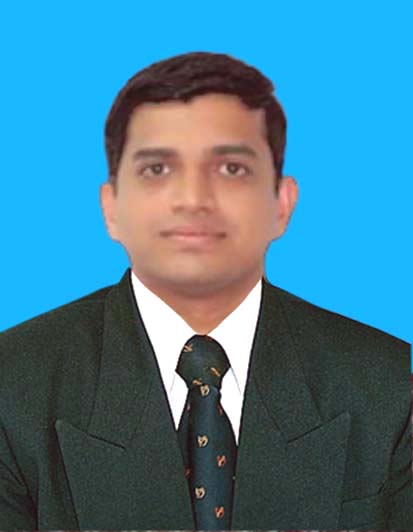
Satyanarayan Padhy currently working as Assistant Professor in the Department of Electronics and Communication Engineering at Centurion University of Technology and Management, Odisha. His research interests include Digital System Design,Signal Processing and Controller design for power converters. He has received his M.Tech from NIT, Allahabad, India in the Year 2013 and Currently Pursuing his PhD. […]